
Table of contents

Key Takeaways
- Routine screening lab work, including blood work and a urinalysis, catches problems such as kidney disease and diabetes early, when they are easier to manage.
- Most pets should have screening lab work at least once a year, and older pets benefit from every six months.
- A standard panel includes a complete blood count, a chemistry panel, a urinalysis, and usually a fecal test, and Modern Animal members receive results in the app once their doctor has personally reviewed them.
Most pet owners know their dog or cat should see the vet regularly. Fewer realize that a physical exam only tells part of the story. Routine screening lab work is how your veterinarian sees what is happening inside your pet, and it is one of the most useful things you can do to stay ahead of health problems.
To walk through what the process involves, we sat down with Dr. Christie Long, Chief Medical Officer at Modern Animal. She explains why lab work matters, what samples are collected, what each test is looking for, and how you will get the results.
Why does my pet need routine screening lab work?
Because many of the most common health problems in dogs and cats do not cause obvious symptoms until they are well advanced. Lab work can detect changes in organ function and blood cells long before your pet looks or acts sick, which gives you and your vet more options for treatment.
"By doing routine screening lab work, we can identify problems early before they become very difficult to overcome," Dr. Long said.
What a physical exam cannot see. During a wellness visit, your vet checks your pet's heart, lungs, weight, skin, teeth, joints, and abdomen. That exam is essential, but it cannot show whether the kidneys are filtering properly, whether the liver is under strain, or whether blood sugar is running high. Pets are also good at hiding discomfort, and a cat with early kidney disease or a dog with early liver changes often looks completely normal at home. Our guide to the annual wellness exam explains how the exam and lab work fit together.
Why early matters. Many chronic conditions in pets progress slowly and quietly. Kidney disease, for example, can be present for a long time before a pet starts drinking and urinating more, and by then a large share of kidney function may already be lost. Caught early, the same condition can often be managed for years. Screening is about having the information while the options are still good.
The value of a baseline. Even when every result is normal, the lab work is worth having. It establishes what normal looks like for your individual pet, so a small shift at the next visit stands out.
How often should my pet have lab work done?
At least once a year for most dogs and cats, and every six months for older pets. Your vet may recommend more frequent testing if your pet has a known condition, takes a long-term medication, or is showing subtle changes.
Dr. Long recommends doing lab work, including blood work and a urinalysis, "at least every year, perhaps even every six months if your pet is older."
Puppies and kittens. Young pets are usually screened for intestinal parasites during their first visits. Blood work is often run before a spay or neuter surgery to make sure anesthesia is safe, and that first panel doubles as an early baseline.
Healthy adults. For a healthy adult dog or cat, an annual panel paired with the yearly wellness exam is the usual rhythm.
Seniors. A year is a long time for a senior dog or cat, and kidney disease, thyroid disease, diabetes, and liver changes all become more common with age, which is why Dr. Long suggests moving to every six months as pets get older. Many vets begin more frequent screening around age seven, and earlier for giant breeds.
Pets on medication or with a known condition. Some long-term medications call for periodic blood work to confirm the liver and kidneys are tolerating them, and pets with a diagnosed condition are rechecked on a schedule set by their vet. If you are not sure where your pet lands, book an appointment and your vet can set a cadence.
What samples are collected, and how should I prepare?
For a standard screening panel, your vet will collect blood and urine, and in most cases a fecal sample as well. Knowing what will happen at the visit makes the appointment easier for both you and your pet.
"It's always important to be prepared when you bring your pet in for routine screening lab work," Dr. Long said, "because knowing what to expect can help you feel more confident and comfortable with the process."
Blood. A member of the medical team draws a small amount of blood, usually from a vein in the neck or a leg. The draw takes a minute or two, and most pets handle it well. That single sample is enough to run both the complete blood count and the chemistry panel.
Urine. Urine is sometimes collected directly from the bladder with a fine needle, a quick procedure that yields a clean sample, and sometimes as a free-catch sample when your pet urinates. If your vet plans to collect urine at the visit, try not to let your pet empty their bladder right before you walk in.
Stool. Dr. Long notes that most of the time a fecal test is run alongside the blood and urine. "You may be asked to bring a sample with you ahead of time," she explains, "or you might collect one at the visit, or drop it off later." If you bring one from home, a fresh sample from within the past day, sealed in a clean bag or container, is ideal.
Fasting. Some clinics ask that pets skip breakfast before blood work, since fat in the blood after a meal can affect a few chemistry values. Water is always fine. Your care team will let you know whether fasting is needed, so do not withhold food unless you have been asked to.
What to bring. A list of any medications, supplements, or diet changes helps your vet interpret the results, since some of these can shift lab values. If you have noticed anything at home, such as changes in thirst, appetite, weight, or bathroom habits, mention it at check-in.
What does each test look for?
A routine screening panel is really four tests, each looking at a different part of your pet's health. Together they cover blood cells, organ function, the urinary system, and intestinal parasites.
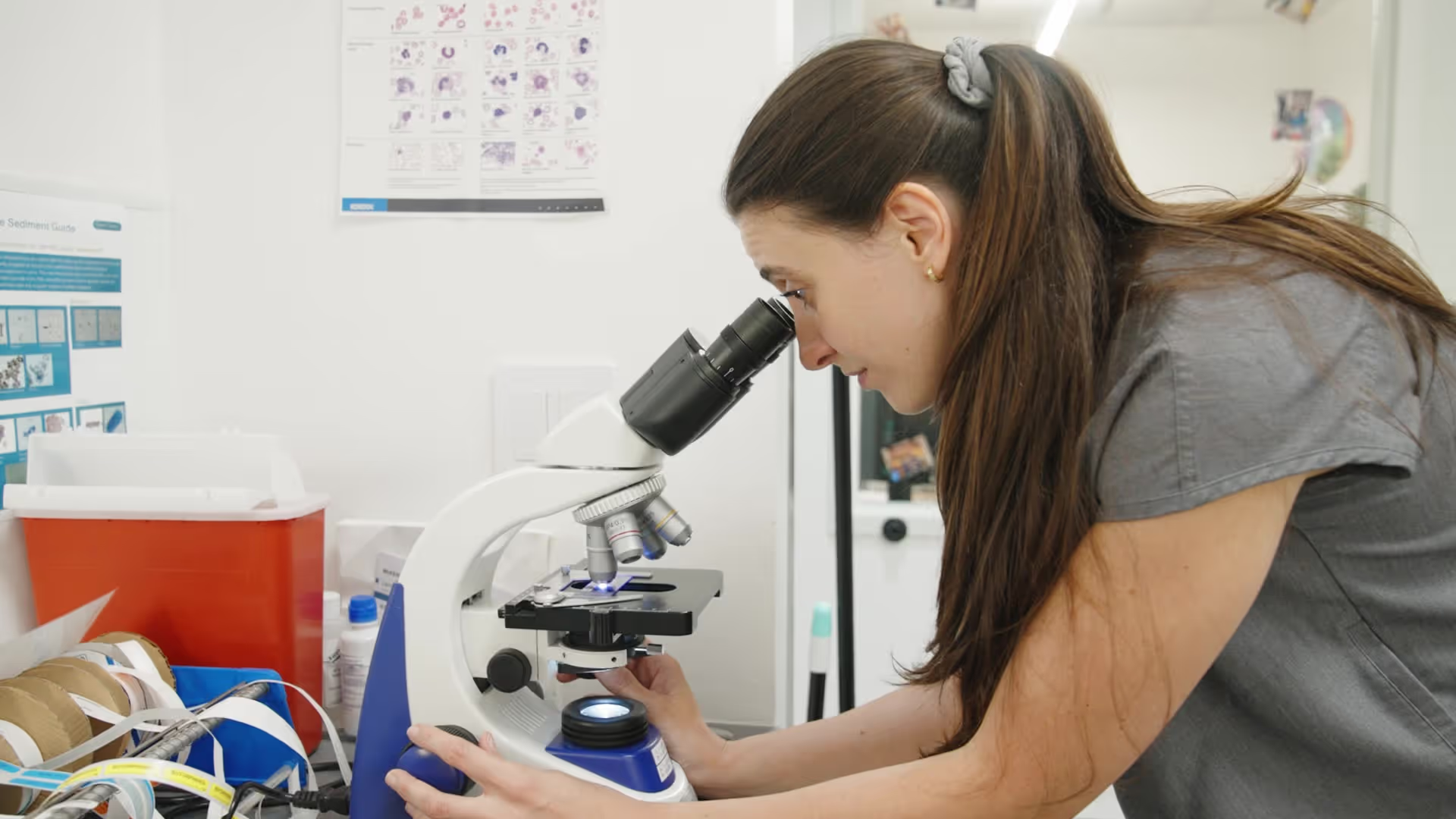
Complete blood count. The CBC is run on blood and looks at the cells that make up that blood. "It looks at the numbers of red blood cells, white blood cells, and platelets," Dr. Long explains, "and also tells us if anything looks odd or unusual about those cells." Red blood cell counts can reveal anemia. White blood cell counts rise with infection or inflammation and fall with some immune problems. Platelets are needed for clotting.
Chemistry panel. Also run on blood, the chemistry panel measures enzymes, proteins, electrolytes, and waste products that reflect how well the organs are working. "That's really going to help us zero in on organ function like liver and kidney issues," Dr. Long said. Kidney values show whether waste is being filtered efficiently. Liver enzymes show whether the liver is stressed or damaged. Blood sugar, protein levels, and electrolytes round out the picture.
Urinalysis. The urinalysis examines urine concentration, chemistry, and sediment. Dr. Long says it helps "really focus in on the kidney function," because the kidneys' ability to concentrate urine often changes before blood values do. "But also it can help us identify diseases like diabetes really early," she adds, since sugar spilling into the urine is one of the earliest signs. A urinalysis can also show urinary tract infection, crystals that lead to stones, and protein loss that signals kidney damage.
Fecal test. The fecal test checks a stool sample for intestinal parasites and their eggs. Roundworms, hookworms, whipworms, and single-celled parasites such as Giardia are common even in pets that stay mostly indoors, and a few can spread to people. Dr. Long notes that this test is run "most of the time" as part of routine screening. Our post on intestinal parasite screening covers it in more detail.
Common add-ons. Depending on your pet's age and history, your vet may add tests to the standard panel. A thyroid level is a frequent addition for older cats, in whom overactive thyroid is common, and for middle-aged and older dogs, in whom an underactive thyroid is more typical. Heartworm and tick-borne disease screening is often paired with annual blood work for dogs.
What can routine lab work catch early?
Kidney disease, liver disease, diabetes, thyroid disease, anemia, infection, and intestinal parasites are the conditions most often picked up by screening lab work before a pet shows clear symptoms. Each one is easier to manage when found early.
Kidney and liver disease. Kidney disease is one of the most common chronic conditions in older cats and is frequent in dogs as well. The chemistry panel and urinalysis together show early changes in filtration and urine concentration, and managed early, many pets do well for years on a kidney-friendly diet and monitoring. Elevated liver enzymes can flag inflammation, infection, or the effects of a medication, and the liver can often recover if the cause is addressed.
Diabetes and thyroid disease. High blood sugar on the chemistry panel and sugar in the urine are the classic early signs of diabetes, and dogs and cats with diabetes usually do well with treatment. Overactive thyroid in older cats and underactive thyroid in dogs are both common and very treatable, and are confirmed with a thyroid test added to the panel.
Anemia, infection, and parasites. The CBC picks up anemia, infection, and inflammation through red and white blood cell counts, often before your pet seems unwell. Intestinal parasites can cause weight loss, diarrhea, and a poor coat, but many infected pets look fine, and the fecal test finds them so they can be treated.
How will I get the results, and what do they mean?
Results usually come back within a day or two, depending on the tests run. If you are a Modern Animal member, they are delivered directly in the Modern Animal app once your doctor has reviewed them.
"As a Modern Animal member, you use an app to communicate with us, and it's the same with your lab results," Dr. Long said. "Your pet's lab results will be delivered into the app. You get a notification to know when your doctor has personally reviewed them and posted the results for you."
Reading the report. Lab results are listed with a reference range next to each value, and anything outside that range is flagged. A flagged value is not automatically a diagnosis. A mildly high or low number can reflect stress at the visit, a recent meal, a medication, or simply your pet's normal. Your vet reads results in context, alongside your pet's exam, history, and any earlier lab work, and will explain what is meaningful.
When a result is abnormal. If something needs attention, your vet may recommend repeating the test in a few weeks to see whether the change holds, adding a more specific test, or adjusting your pet's care. Many abnormal findings resolve on recheck; others lead to an early diagnosis, which is the point of screening.
Keeping records together. Having lab results in the app means they stay with the rest of your pet's health records, so you and your vet can compare this year's panel to last year's without digging through paperwork. If you have questions after reading the results, Modern Animal All Access and Essential members can reach the team anytime through 24/7 Virtual Care.
What does routine screening lab work cost?
The cost of routine screening lab work varies by location and by which tests are recommended for your pet. A young, healthy dog or cat usually needs a smaller panel than a senior pet or one with a known condition.
What affects the price. The type of visit is one factor, since lab work is often bundled with a wellness exam but can also be run on its own. Your pet's age and health history shape which tests your vet recommends, and add-ons such as thyroid testing or heartworm screening are priced separately from the core panel. Your vet will walk through what is recommended and why before anything is run.
For a full breakdown of service and test pricing at Modern Animal, visit modernanimal.com/pricing. Everything is listed transparently so you know what to expect before you come in.
The bottom line. Routine screening lab work is one of the simplest, highest-value things you can do for your pet's long-term health. A complete blood count, chemistry panel, urinalysis, and fecal test together give your vet a picture that no physical exam can provide, and they find problems such as kidney disease and diabetes at the stage where treatment works best. For most pets that means testing once a year, and for older pets every six months.
If your pet is due for screening, or you want to talk through what is recommended for their age and lifestyle, book an appointment and we will take it from there. For more on preventive care, visit the Modern Animal blog.
Frequently Asked Questions
Modern Animal members receive results in the Modern Animal app. Dr. Long explains that you get a notification once your doctor has personally reviewed the results and posted them for you, so you are not waiting on a phone call. Results typically come back within a day or two, and your vet will note anything that needs follow-up. Members with questions after reviewing the results can reach the team anytime through 24/7 Virtual Care.
Yes. Many conditions, including kidney disease, diabetes, and thyroid disease, develop quietly and do not cause visible signs until they are advanced. Dr. Long emphasizes that routine screening lab work lets your vet identify problems early, before they become very difficult to overcome. Normal results are valuable too, because they establish your pet's individual baseline and make small changes at future visits easier to spot.
Both help evaluate the kidneys, but from different angles. The chemistry panel is run on blood and, as Dr. Long puts it, helps zero in on organ function such as liver and kidney issues. The urinalysis examines urine and focuses on kidney function, since changes in urine concentration often show up before blood values shift. It can also identify diabetes early and reveal urinary infections, crystals, and protein loss. Together they give a fuller picture than either alone.
A complete blood count measures red blood cells, white blood cells, and platelets. Dr. Long explains that it also shows whether anything looks odd or unusual about those cells. Low red cells point to anemia, high white cells suggest infection or inflammation, and low platelets can affect clotting. The CBC is run on the same blood sample as the chemistry panel and gives your vet a baseline to track over time.
Does my pet need to fast before blood work? Sometimes. Fat in the blood after a meal can affect a few chemistry values, so some clinics ask that pets skip breakfast before a blood draw. Water is always fine. Your care team will tell you whether fasting is needed for your pet's appointment, so do not withhold food unless you have been asked to. Puppies, kittens, small pets, and pets with diabetes should not fast unless a vet specifically directs it.
At least once a year for most pets. Dr. Long recommends lab work, including blood work and a urinalysis, at least every year, and every six months for older pets. Pets on long-term medications or with a diagnosed condition may need more frequent testing on a schedule set by their vet. Pairing the annual panel with the yearly wellness exam is the easiest way to keep it consistent, and each result becomes a baseline for comparing the next one.