Table of contents

Key Takeaways
- A wellness exam is a complete nose-to-tail physical that establishes a baseline for your pet and helps your vet spot health changes before they become serious problems.
- Dogs and cats under 10 should see the vet once a year; at 10 and older, every six months is the recommended cadence because age-related conditions tend to appear and progress faster.
- Modern Animal All Access members get unlimited routine wellness exams at no additional charge, and Essential members get one included per plan year.
If you have ever left a vet appointment with a list of questions you forgot to ask, you are not alone. The annual pet wellness exam is the best opportunity to get those questions answered, and it does a lot more than most pet owners realize.
To walk through what happens during the visit and why it matters, we sat down with Dr. Christie Long, Chief Medical Officer at Modern Animal. Her starting point is simple. "It's really important that your pet see a veterinarian at least once a year for a full physical exam," she said. "And that means nose to tail, all the way."
Below, she explains what your vet is actually checking, how often your dog or cat should come in, how vaccine decisions are made, what to bring up during the visit, and why the schedule changes once a pet turns 10.
What Actually Happens at a Pet Wellness Exam?
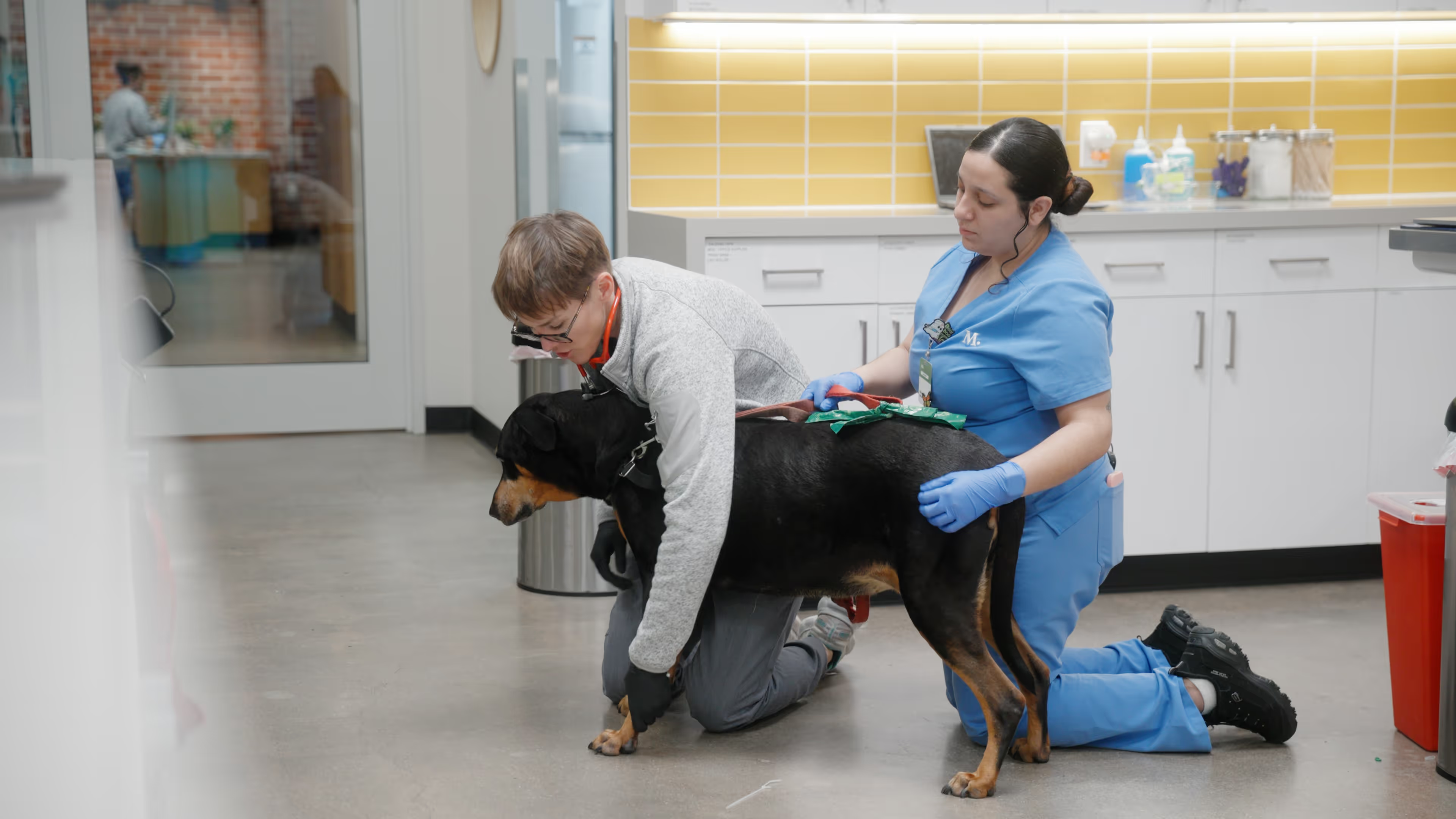
A pet wellness exam is a complete physical examination of a healthy or apparently healthy animal. Your vet works systematically from head to tail, checking each body system by hand, by eye, and by stethoscope, and uses what they find to establish a baseline and catch early signs of disease.
Dr. Long describes the sequence in plain terms. "We're going to look at eyes, ears, nose, teeth, check all the joints for pain. Listen to the heart and lungs. Palpate the abdomen to feel for changes in organ size or pain in the abdomen. And look at the rear end as well, because there's important things that go on back there."
Eyes, ears, nose, and mouth. Your vet checks the eyes for cloudiness, discharge, redness, or changes that can point to problems like cataracts or high blood pressure. The ears are examined for wax buildup, odor, inflammation, or mites. The nose and airways are checked for discharge or noisy breathing. The mouth gets a close look at the teeth and gums, since dental disease is one of the most common problems in adult dogs and cats and is easy to miss at home.
Heart and lungs. Listening with a stethoscope picks up heart murmurs, irregular rhythms, and abnormal lung sounds. Many heart conditions in dogs and cats are first detected as a murmur at a routine exam, well before any symptoms appear.
Abdomen. Gently feeling the belly lets your vet assess the size and shape of the liver, kidneys, spleen, bladder, and intestines, and check for pain, masses, or fluid. Changes in organ size are often the first physical sign of an internal problem.
Joints, muscles, and movement. Your vet flexes and extends the limbs and watches how your pet moves to look for stiffness, pain, or reduced range of motion. This matters at every age, but it becomes especially important for spotting early arthritis in older pets.
Skin, coat, and body condition. The exam includes a look at the skin for lumps, rashes, parasites, or hair loss, and an assessment of body condition. Weight changes in either direction can be early signals of illness, so your pet is weighed at every visit and the number is compared to previous visits.
The rear end. As Dr. Long notes, there is important information back there. Your vet checks the anal glands, looks for signs of parasites or irritation, and, depending on your pet's age and sex, may check the prostate or mammary glands.
Why the baseline matters. The goal is not only to confirm that everything looks fine today. It is to build a record of what normal looks like for your individual pet, so that a small change next year stands out. "Anytime we can have a chance to interact with our pets on that level and learn about the status of their health, we can learn important things about what could be going on with them before they become real problems," Dr. Long said. Problems found early are almost always easier and less expensive to treat.
How Often Should My Dog or Cat See the Vet?
Dogs and cats under the age of 10 should have a wellness exam once a year. At 10 and older, the recommendation shifts to every six months. Puppies and kittens see the vet more often in their first year for vaccines and growth checks.
"We recommend a yearly wellness exam for dogs and cats under the age of ten," Dr. Long said. "When they get to be ten, we start to want to think about seeing them every six months to do a full physical exam."
Why once a year for adults. A year is long enough for meaningful changes to develop in a pet, but short enough that most emerging problems are still early and manageable when they are found. Annual visits also keep vaccines and parasite prevention on schedule and give you a regular chance to talk through anything you have noticed.
Why every six months after 10. Pets age faster than people, and a lot can change in six months for a senior animal. Dr. Long puts it this way: "At that age, problems start to onset and accelerate, and we want to be sure we get ahead of them." A twice-yearly schedule gives your vet twice as many chances to catch something early. The section on senior pets below covers this in more detail.
What about puppies and kittens? Young pets typically visit every three to four weeks from about eight weeks of age until roughly 16 weeks, so they can complete their vaccine series, get dewormed, and be checked as they grow. After that, they move to the annual schedule.
If it has been more than a year. Life gets busy and visits slip. If your pet is overdue, the best move is simply to book an appointment rather than wait for the next reminder. There is no penalty for being late, and your vet will pick up where the record left off.
What vaccinations happen at a wellness exam?
Vaccines are a core part of the wellness visit, but the exact list depends on your pet. Every dog and cat needs a set of core vaccines regardless of lifestyle. Beyond those, your vet recommends additional vaccines based on where your pet goes, who they meet, and what risks they face.
"We're also going to think about what vaccinations are important to do for your pet at this time," Dr. Long said. Those decisions, she explains, come down to your pet's lifestyle and the diseases every dog and cat needs protection from, and all of that figures into the vaccination schedule she recommends.
Core vaccines for dogs. These protect against rabies, distemper, parvovirus, and adenovirus (hepatitis), and are recommended for every dog. Rabies vaccination is also required by law in most places.
Core vaccines for cats. These protect against rabies and the combination of feline panleukopenia, herpesvirus, and calicivirus, and are recommended for every cat, including indoor-only cats.
Lifestyle vaccines. These depend on exposure. Dogs that go to daycare, boarding, grooming, or dog parks are often advised to get the Bordetella vaccine for kennel cough, and may also be candidates for leptospirosis, canine influenza, or Lyme vaccines depending on region and activity. Cats that go outdoors or live with other cats may be advised to get the feline leukemia vaccine.
Boosters and timing. Some vaccines are given yearly and others every three years, depending on the vaccine and your pet's history. Your vet will tell you what is due at each visit. If you have lost track of what your pet is up to date on, you can pull their vaccine records anytime in the Modern Animal app.
It is a conversation, not a checklist. Your vet will ask about travel, boarding, time outdoors, contact with other animals, and anything else that changes your pet's exposure. That conversation is what shapes the recommendation, which is why two pets of the same age can leave with different vaccine plans.
What lab work or screening might my vet recommend?
Depending on your pet's age, health, and lifestyle, your vet may recommend routine screening tests alongside the physical exam. These commonly include a heartworm test for dogs, a fecal test for intestinal parasites, and, especially for older pets, blood work and a urinalysis.
The physical exam tells your vet a great deal, but some problems only show up in the lab. Screening tests add a layer of information the exam cannot provide on its own.
Heartworm testing. Dogs should be tested for heartworm once a year, even when they are on prevention, and before starting or restarting a preventive. It is a quick blood draw that is typically run with the rest of the visit. Our post on heartworm testing and prevention covers why the timing matters.
Fecal testing. A stool sample is checked for intestinal parasites like roundworms, hookworms, whipworms, and giardia. These are common, often cause no obvious symptoms, and some can spread to people, so annual screening is standard for dogs and cats.
Blood work and urinalysis. A complete blood count, chemistry panel, and urinalysis check organ function, blood sugar, red and white cell counts, and more. For young, healthy pets, these tests establish a baseline. For pets approaching or past age 10, they become an important way to catch kidney disease, liver changes, diabetes, and thyroid problems before symptoms appear. Our post on routine screening lab work explains what each test looks for.
Parasite prevention. Your vet will also review flea, tick, and heartworm prevention and adjust it to your area and your pet's habits. Modern Animal members can set up Autoship in the app so monthly prevention arrives on schedule.
Not every test, every year. Which tests your vet recommends depends on your pet's age, breed, history, and what turns up on the exam. As Dr. Long said, "Routine wellness exams are not one size fits all." Your vet will explain what they are suggesting and why before anything is run.
What questions should I ask at my pet's wellness visit?
Bring up anything you have noticed or wondered about since the last visit: eating, drinking, bathroom habits, energy, behavior, weight, mobility, and anything that seems new or off. There is no question too small, and the visit is the best time to get answers from someone who knows your pet.
Dr. Long sees this as one of the most valuable parts of the exam. "The great thing about the wellness visit with your veterinarian is that this is your opportunity to ask all those questions that you haven't been able to get the answers to," she said. "You've got direct face time with your veterinarian to talk about things like diet, treats, behavior issues that you're seeing at home."
Diet and treats. Ask whether your pet's current food fits their age, size, and activity level, how much to feed, and which treats or table foods to avoid. Weight is one of the most controllable factors in a pet's long-term health, and a quick conversation about portions can make a real difference.
Behavior. Anything new counts: anxiety, aggression, house-soiling, changes in sleep, vocalizing, or hiding. Behavior changes are sometimes the first sign of a medical problem, especially in cats, and your vet can help sort out what is medical and what is not.
Weight and mobility. Slowing down on walks, hesitating at stairs, difficulty jumping onto furniture, or stiffness after rest are worth mentioning at any age and become especially important as pets get older.
Preventive care. Ask which parasite preventives make sense for your area, whether any vaccines are due, and how often dental cleanings are recommended for your pet.
Anything you have been putting off. A small lump, an occasional cough, a habit that seems odd. If it has crossed your mind, it is worth raising.
How to prepare for the visit. A little preparation makes the appointment more productive. Write down your questions ahead of time. Note any changes in eating, drinking, urination, or stool. Bring a list of current foods, treats, supplements, and medications, including doses. If your vet has asked for a stool sample, collect a fresh one the day of the visit. For cats, getting the carrier out a few days early and leaving it open with a blanket inside can make the trip far less stressful.
Between visits. If a question comes up before the next appointment, Modern Animal All Access and Essential members can reach our veterinary team anytime through 24/7 Virtual Care. You do not have to wait a year to get an answer.
Why do senior pets need more frequent checkups?
Pets 10 and older should see the vet every six months because age-related conditions like kidney disease, heart disease, arthritis, dental disease, and cancer become more common and tend to progress faster. Twice-yearly exams give your vet more opportunities to catch these problems while they are still manageable.
Dr. Long explains the shift directly: "At that age, problems start to onset and accelerate, and we want to be sure we get ahead of them."
What changes as pets age. Kidney function declines gradually in many older cats. Heart murmurs become more common in older small-breed dogs. Arthritis develops in a large share of senior dogs and cats, and pets are good at hiding joint pain until it is fairly advanced. Dental disease accumulates over years. Lumps and bumps appear more often, and some need to be checked. None of these are inevitable, but all of them are easier to manage when they are found early.
Why six months makes a difference. A senior pet can go from normal to noticeably unwell within a few months. Seeing your vet twice a year means a problem that starts shortly after one visit is likely to be caught at the next one rather than a year later. Combined with the blood work and urinalysis your vet may recommend for senior pets, it gives your dog or cat the best chance at staying comfortable for as long as possible.
What to watch for at home. Between visits, keep an eye on drinking and urination (increases can point to kidney disease or diabetes), appetite and weight, energy and mobility, breathing, and any new lumps. Mention anything you notice at the next exam, or reach out sooner if something seems clearly wrong.
When does "senior" start? Ten is the general threshold Modern Animal uses for shifting to twice-yearly exams. Large and giant breed dogs age faster than small breeds, so your vet may recommend the change earlier for them. If you are not sure whether your pet is approaching that point, ask at your next visit.
What does a pet wellness exam cost?
The cost of a wellness visit depends on a few factors: your pet's age, whether any vaccines are due, and what screening tests or other services your vet recommends during the appointment. The exam itself is the foundation, and everything else is added based on your pet's needs.
At Modern Animal, your membership plan also factors in. All Access members get unlimited wellness exams included at no additional charge. As Dr. Long notes, "With your All Access membership at Modern Animal, a routine wellness exam comes at no additional charge." Essential members get one exam included per plan year. If you are not a member, a routine wellness exam runs between $75 and $85 depending on which city you are in.
Vaccines, lab work, and parasite prevention are priced separately, and your vet will walk you through what they are recommending and why before anything is done. If you are weighing how to budget for unexpected care on top of routine visits, our post on pet insurance explains how coverage works.
For a full breakdown of what's included at each membership tier, and the price of services and tests you may be recommended during your visit, visit modernanimal.com/pricing.
The bottom line. The annual pet wellness exam is one of the simplest, highest-impact things you can do for your dog or cat. It is a full nose-to-tail check, a chance to keep vaccines and prevention current, and, as Dr. Long puts it, your opportunity to ask all the questions you have not been able to get answered. For pets under 10, once a year is the right rhythm; at 10 and older, every six months helps your vet stay ahead of the problems that come with age. If your pet is due, book an appointment through the Modern Animal app or online. And if something comes up before then, members can reach our team anytime through 24/7 Virtual Care.
Frequently Asked Questions
A wellness exam is a complete nose-to-tail physical. Dr. Long describes it as checking the eyes, ears, nose, and teeth, examining the joints for pain, listening to the heart and lungs, feeling the abdomen for changes in organ size or discomfort, and checking the rear end. Your pet is weighed, and your vet reviews vaccines and parasite prevention and may recommend screening tests. It is also your time to ask questions about diet, behavior, and anything else you have noticed at home.
Bringing a few things helps. Note any changes in eating, drinking, urination, stool, or behavior since the last visit. Bring a list of current foods, treats, supplements, and medications with doses. If your vet requested a fecal sample, collect a fresh one that day. For cats, a carrier they are comfortable with makes the trip easier. If your pet's records are in the Modern Animal app, your vet can already see their vaccine history.
Yes. Indoor cats still develop dental disease, kidney disease, obesity, arthritis, and other conditions, and cats are especially good at hiding illness. A yearly exam, and twice-yearly exams after age 10, are the best way to catch problems early. Indoor cats also need their core vaccines, including rabies, since exposure can happen through an open door, a visiting animal, or a trip to a boarding facility.
It depends on your pet's needs and, at Modern Animal, on your membership. All Access members get unlimited wellness exams at no additional charge, and Essential members get one included per plan year. Non-members pay between $75 and $85 for the exam depending on the city. Vaccines, lab work, and prevention are priced separately, and Dr. Long notes that a full list of prices is available at modernanimal.com/pricing so you know what to expect before you come in.
Ask about anything you have noticed or wondered about: whether your pet's food and portions fit their age and activity level, any behavior changes, weight and mobility, which parasite preventives make sense for your area, and whether any vaccines or dental care are due. Dr. Long describes the wellness visit as direct face time with your veterinarian, so it is worth writing your questions down ahead of time so none get forgotten.
Once a year for dogs and cats under 10, and every six months once they reach 10. Dr. Long explains that at that age, problems start to appear and accelerate, so more frequent exams help your vet get ahead of them. Puppies and kittens visit more often in their first few months for vaccines and growth checks. Large and giant breed dogs may shift to the twice-yearly schedule earlier because they age faster.