Table of contents
Key Takeaways
- Many dogs are considered seniors around seven or eight years old, and that is a good time to start talking with your vet about senior care and end of life options, long before you need them.
- Anticipatory grief, the heavy feeling of mourning a pet who is still alive, is common and real, and naming it can make it easier to live with.
- Planning ahead for euthanasia, aftercare, and your other pets' needs does not invite loss, but it can free you to simply be present with your pet in their final days.
Senior pet care is usually described in practical terms: more frequent checkups, bloodwork, medication schedules. All of that matters. But there is another side to it that rarely gets talked about, which is what it feels like to care, every day, for someone you know you will eventually have to say goodbye to.
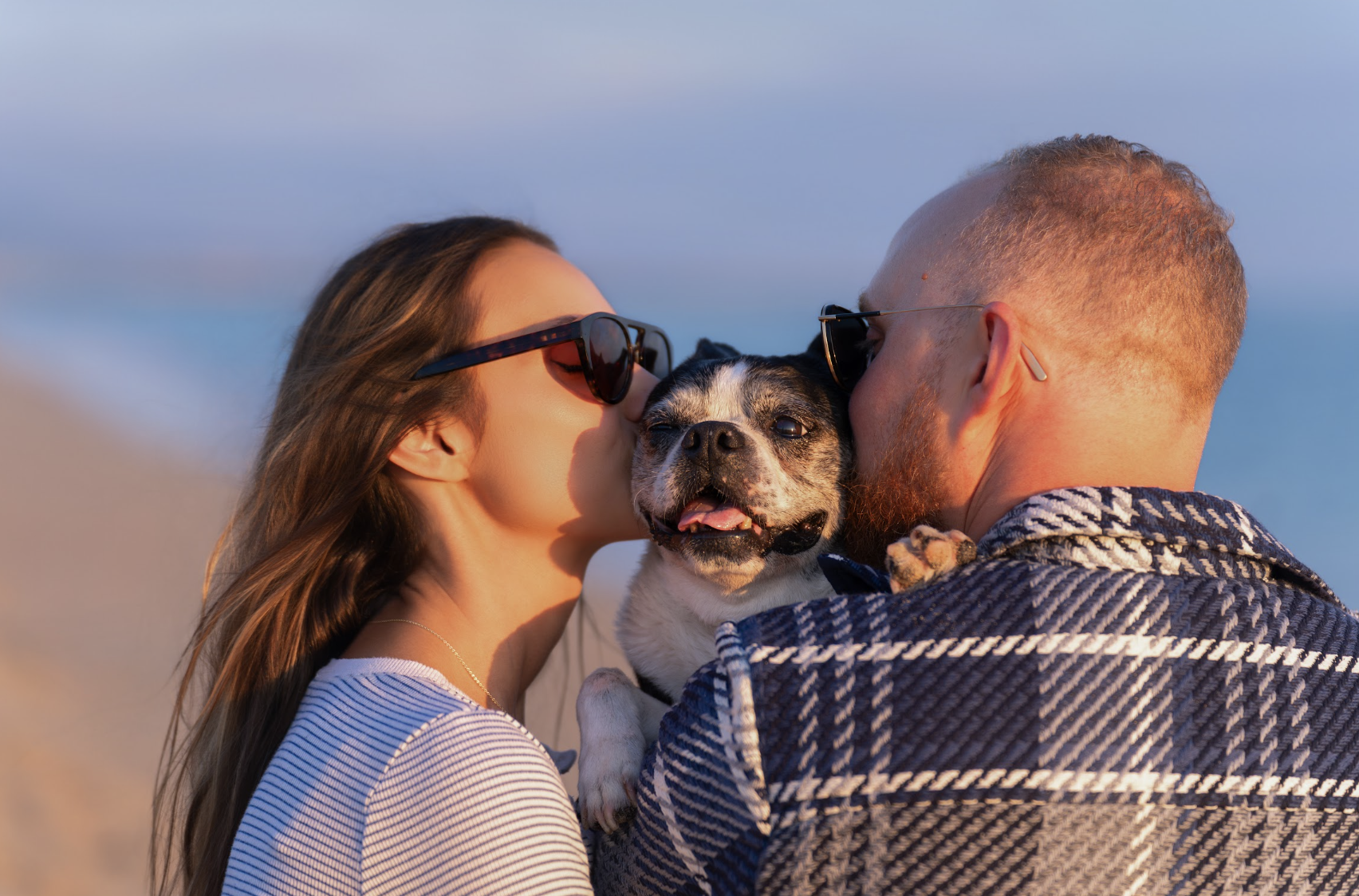
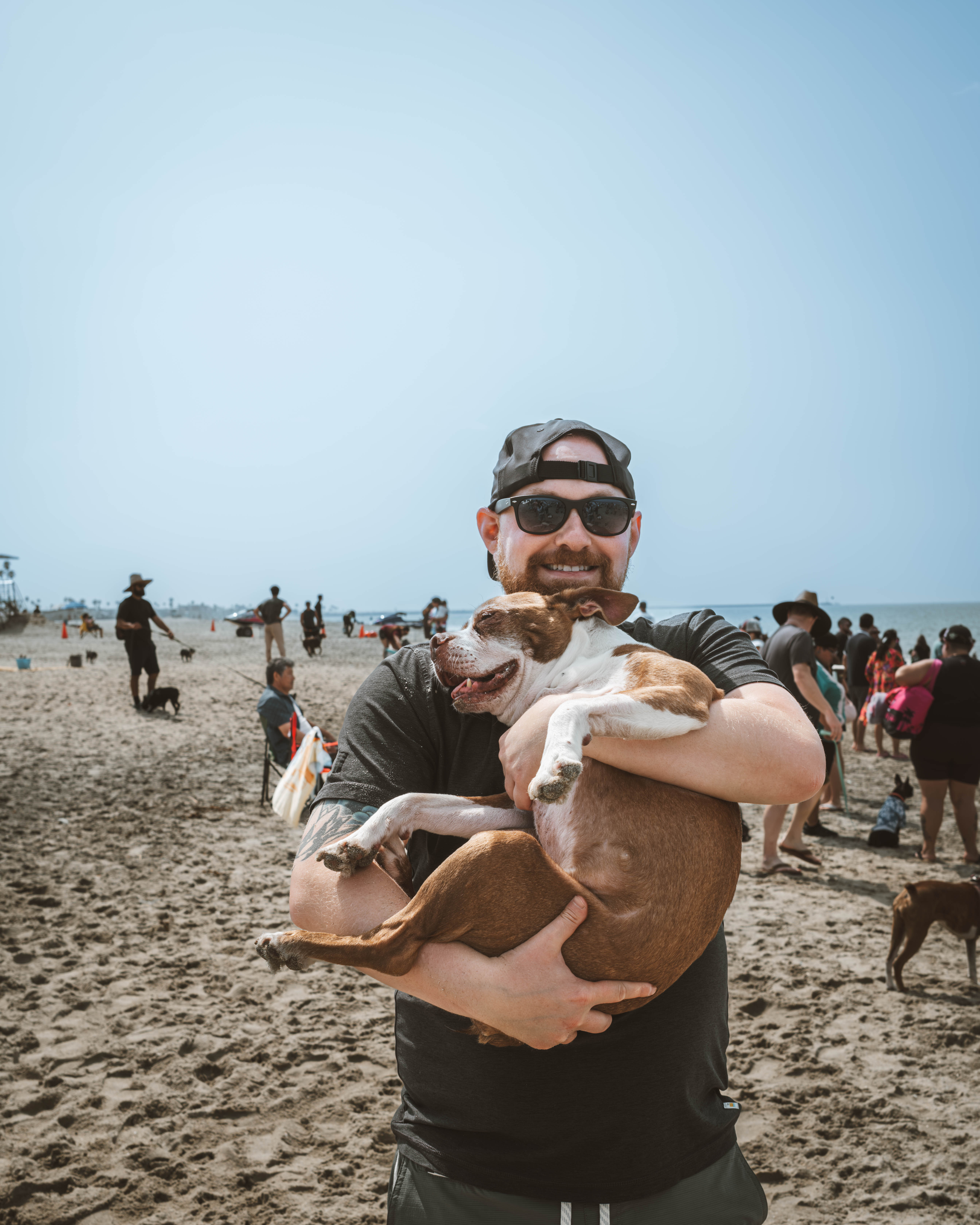
To talk about that side of it, we spoke with Adam Greenbaum, founder of Love, Baxter, a free pet loss and end of life resource he created after the death of his Boston terrier, Baxter. Adam has spent about 15 years supporting veterinary businesses and clinics, and he is living through senior pet care right now with Sophie, his 16 and a half year old Boston terrier, who comes to Modern Animal regularly.
He showed us a folder of photos and videos and walked us through them one by one. Before he started, he said something that set the tone for everything that followed. "God, Baxter was the best," he said. "It's weird that it's been almost two years. It's still hard to talk about him."
Who Was Baxter, and Why Did His Loss Lead to Love, Baxter?
Baxter was a Boston terrier Adam rescued as a young puppy in 2012, and he was by Adam's side for 12 and a half years. When Baxter died, Adam was struck by how little support existed for people grieving a pet, and Love, Baxter grew out of that experience.
At the time, Adam was running a national Boston terrier rescue. He got a call from a man who said his puppy was screaming and he could not sleep. When Adam arrived, Baxter was badly malnourished and had been left in a box of his own waste. Adam brought him home on June 12, 2012, where Sophie, who had joined the family two years earlier, was already waiting.
"He had this tough first couple weeks, months of his life," Adam said. "And he was just this sweet, loving guy." He was also, in Adam's words, the quintessential Boston terrier puppy. "He was wild, but in a cool way, a good way."
He was Adam's shadow. What Adam remembers most is that Baxter never left his side. "It's like he knew about those first couple months," he said, "because he just spent the rest of his life being by my side, never leaving."
For years, Adam woke up around 4 a.m. to work. Sometimes that meant walking to a desk in the dining area of an apartment, and sometimes it meant going two floors down in the house. Either way, Baxter would be sound asleep next to him in bed. Adam described what happened next like a conversation the two of them had every morning. "He'd look at me kind of like, are we going? And I'd kind of nod, like, yeah, we're going downstairs. And he would say, okay, cool. And he would just get up and come down."
It was like that all day. "Time to go for a walk, he was always right there. Time to take the trash out, he was always right there," Adam said. "And you'd say, man, I forgot something, I got to go grab something in the other room. And he was just there, always. I think for a lot of people, that would bug them. But for me, it was my favorite thing."
People who met Baxter tended to see a hyper little dog running around the house with Sophie. "People always saw him as this crazy puppy," Adam said. "But to me, he was just truly my shadow."
He took care of everyone. Ask Adam what story he tells people who never met Baxter, and he does not land on one moment. He lands on who Baxter was. "He was the type of pet that really takes care of you," he said.
He paused on a photo of Baxter and Sophie together. "This picture here is a perfect encapsulation of my relationship with them," he said. "Sophie's always my baby. I take care of her. Baxter was just always right by my side. He was always just like, hey, man, I'm right here if you need anything."
On family walks, if Adam and Baxter got out ahead of Adam's wife and Sophie, Baxter would stop and turn around to wait. "He knew he found his people and his family," Adam said, "and it was really important to him that everyone was together."
Then there was Nala. The family adopted her as a cat who had been found alone in the mountains of Colorado, then adopted and returned twice. She was tough, and on her first day home, she was scared. "Bax just walked over to her and kind of laid down and was just like, hey, it's okay," Adam said. Most of the photos he shared after that were of the two of them together. They were best friends for the rest of Baxter's life.
He went everywhere. Baxter moved with Adam from Las Vegas to Denver and then to the coast, where he spent most of his life. "I brought him every single place I could," Adam said. Baxter rode on boats, where, Adam said, he was "just calm, cool, collected." He was there for Halloween. He got big birthday celebrations. And more than anything, he loved the ocean.
"He just absolutely loved the beach, loved going to the ocean, loved just going crazy and running full speed off leash. It was his favorite thing," Adam said. "He was just free. He would literally lay at the edge of the water and just let the water hit him. We have so many photos like that."
That way of living was intentional, and it still guides the family today. "We wanted every minute of his life, just like we want for Sophie, Nala, Cosmo, we want every minute of their life to be exciting," Adam said. "We want them to experience things and to be able to see the world differently."
Baxter died at home on October 28. Afterward, Adam found that beyond a sympathy card, there was almost nothing out there for someone in his position. That gap is what Love, Baxter was built to fill. "Losing a pet is losing a member of the family," he said. "It's not like losing a member of the family. It is losing a member of the family."
When Does Senior Pet Care Start for Dogs and Cats?
Many dogs are considered seniors around seven or eight years old, and large and giant breeds often reach that stage sooner. Cats are commonly considered seniors around 10. Adam's advice is to treat that milestone as the time to start preparing, even when your pet seems perfectly healthy.
"Seven, eight years old, for most dogs, they're a senior," Adam said. "It is not a bad thing to prepare."
He is quick to point out that there is no single definition everyone agrees on. In his experience, vets can have different opinions on what counts as a senior pet, what counts as chronically ill, and when and where euthanasia makes sense. That is one more reason he encourages owners to start asking questions early, rather than waiting until a crisis forces the conversation.
Preparing does not invite loss. This is the point Adam comes back to again and again. "Preparing for this does not invite it," he said. "We don't know when tomorrow is going to end."
He has a sobering reason for saying so. Love, Baxter hears from thousands of pet parents, and Adam says there are just as many people whose pets pass away before age seven as there are people whose pets live past 10 or 12. "I hope it's a far away time for everyone," he said, "but you never know."
What senior care usually includes. As pets age, veterinarians generally recommend wellness exams about twice a year rather than once, because health can change quickly in older animals and a lot can happen in six months. Senior visits often include bloodwork and urine testing to look for early changes in kidney, liver, and thyroid function, along with a close look at weight, teeth, joints, heart, and eyes. Catching a problem early often means more treatment options and more comfortable time.
Changes worth watching at home. You know your pet better than anyone, and many early signs of illness in senior pets show up at home before they show up anywhere else. Drinking or urinating more than usual, eating less or more, losing or gaining weight, sleeping more, hesitating on stairs or jumping, bad breath, new lumps, confusion at night, or a change in personality are all worth mentioning to your vet. None of these automatically means something is wrong, but together they help your vet see the full picture.
Questions to ask early. A senior exam is also a calm time to ask the bigger questions: how you will know if your pet is in pain, what quality of life looks like for them specifically, and what options exist down the road. Love, Baxter's senior pet care guides go deep on this stage, from mobility and appetite changes to managing chronic illness at home.
What Does Caring for an Aging Pet Look Like Day to Day?
Caring for an aging pet often means more appointments, more medications, and more decisions about how far to go with testing and treatment. For Adam, it also means a deliberate effort to keep Sophie's days full and happy for as long as she has them.
Sophie came home on June 14, 2010, and Adam still has the photo. "The day I brought her home, I made the decision that I was going to be there forever no matter what," he said.
Now 16 and a half, Sophie has Cushing's disease and hypothyroidism. She does physical therapy and acupuncture, and on some days the family has to trick her into eating. Adam is honest about what that takes. "Having a 16 and a half year old pet is so hard, and it's mentally draining," he said. "It's very expensive."
The decisions get harder. One of the hardest parts of senior pet care is that the medical questions stop having obvious answers. Adam described what happens when a vet hears something new. "It's hard when vets say, hey, we need to do blood work. We heard a heart murmur in Sophie, we want to check that," he said. "Okay, well, she's 16 and a half. How many thousands of dollars are we willing to spend? And if we were to find something, how deep into treatment would we go?"
There is no single right answer to those questions, and it is okay to say that out loud. It is completely reasonable to ask your vet for an estimate before a test, to ask what the results would change about her care, and to talk openly about your goals, whether that means pursuing every option or focusing on comfort. Many vets also use quality of life scales to help families look at things like pain, appetite, hydration, hygiene, mobility, and whether a pet still has more good days than bad. Having those conversations ahead of time means decisions are guided by what matters most for your pet and your family, not just by what is happening in the exam room that day.
Life gets smaller in some ways. Caring for Sophie has changed how Adam lives. He travels less and goes out less. When we talked, he was a few days away from a wedding he had decided not to attend. "I'm not going because I need to be here with Sophie," he said. "So it starts really impacting your life."
Some of the hardest moments have come from people close to him. Over the last couple of years, he said, some have asked versions of the same question: wouldn't life be easier if you euthanized her? He described what they have said to him. "You're not traveling, you're not going out as much, you're not coming to see us, you're not doing all these things, for this dog that's basically dead."
His answer is simple. "Well, she's not basically dead," he said. "Just because you see a 16 year old dog doesn't mean that she's ready to die or should die."
He has stopped trying to change anyone's mind. "I don't think it's my job to convince people that Sophie, Baxter, Nala, Cosmo, they're my kids," he said. "I don't care what they believe. I know what they are. But I do wish the institutions were better."
Some days are still wonderful. For all of that, Adam is clear that this stage of Sophie's life is not only hard. "On the flip side, I like to remind myself how lucky we are," he said. "We have this time with her, and we still get to go for long walks with her, and we still get to enjoy life and take her to the beach, and she's still smiling and happy to be part of everything." The family still celebrates her birthdays. He showed us a photo from her 16th.
What Is Anticipatory Grief, and How Do You Cope With It?
Anticipatory grief is the grief people feel before a loss happens, often while caring for a pet who is aging or seriously ill. It can bring dread, guilt, anxiety, and even physical symptoms, and because there is no visible loss yet, the people around you may not recognize what you are going through.
Adam describes it this way: "It's this debilitating thing, that you're sitting there almost waiting for something horrible to happen."
It lives inside ordinary moments. "It is so hard when every time you order food or medication for her, you don't know if this is the last food or medication you'll ever order for her," he said.
When it was time to renew Sophie's physical therapy, the clinic offered a lower price per session if he bought a package of three or four up front. On paper, it was an easy decision. "It was like, well, if I don't buy four, I'm basically admitting that I don't think she's going to be here, which is horrible," Adam said. "So we did that."
What it can feel like. Adam points to a list from Cornell that describes how anticipatory grief can show up. In the body, it can look like nausea, aches, weight gain or loss, or feeling tense, jittery, or restless. Everyday tasks can get harder. Some people feel as though none of it is quite real. Dread can arrive out of nowhere, and guilt or doubt about decisions can creep in. Adam recognizes much of that list in himself. "I feel tense all the time," he said, and the waves of dread that come out of nowhere, he added, "definitely" happen to his family too.
Grieving who they used to be. Part of anticipatory grief is not about the future at all. It is about what has already changed. "It's not just, hey, she's gonna die soon," Adam said. "It's, man, I wish when you were able to walk better. I wish when you were begging for food and we didn't have to trick you to eat."
Why it can feel so lonely. When someone is seriously ill, there are usually rituals and support around the family. With anticipatory grief for a pet, Adam says, there is nothing outward to mark what you are carrying. "There's no loss. There's no funeral, there's no cards, there's no nothing," he said. "People will say, hey, how's your pet doing? And then you just kind of walk away from it."
What helps. Adam says many people who reach out to Love, Baxter are living with anticipatory grief without even knowing what it is, and simply learning that it has a name, and that it is common, can be a relief. Love, Baxter's section on grief and emotions around pet loss is a good place to start reading.
A few other things tend to help. Talk about it with people who understand, whether that is a friend who has been through it or a counselor who specializes in pet loss. Keep your routines with your pet, since those daily walks and rituals matter to both of you. Some families make a list of things they want to do together while their pet still feels well, or start gathering photos, videos, or a paw print. And talk honestly with your vet about your pet's comfort, so decisions feel less like guesswork and more like a plan.
Most of all, Adam tries to hold the hard feelings alongside the good ones. Sophie is still here. She still gets to go to the beach.
How to Prepare for End of Life Care for Your Pet
Preparing for end of life care means learning your options for euthanasia and aftercare, talking with your vet before a crisis, and deciding ahead of time what matters most to you. Adam says his biggest regret with Baxter was waiting too long to face it.
"We went through that with Baxter," he said. "We were in such denial up until the last possible second. We don't have his ashes back. A lot of things weren't done great because we were in denial until the last possible second."
He also sees a bigger pattern behind that experience. "We have end of life and euthanasia conversations that don't happen until the day they're needed," he said. By then, families are exhausted, frightened, and trying to make permanent decisions in a matter of hours.
The last days. Baxter's final days were not easy. "The last five days of Baxter's life were really horrible," Adam said. "Luckily, the last 24 hours weren't bad, given the circumstances. We were able to take him to the beach and take pictures with him one last time, and just say goodbye the right way, and let him kind of lay in the beach and just enjoy it and hear the waves for his last day."
One of the photos he shared was taken a couple of days before Baxter died. "Even at the end, he just wanted to be there, wanted to make sure everyone was okay," he said. "Just the way he looked at you, the way he looked deep in your eyes, was just amazing."
Baxter's euthanasia happened at home. Adam showed us one last photo. "This was the last picture we ever took with him," he said. "This was in our living room, where we said goodbye, which was really hard."
Know that in-home euthanasia is an option. Adam shared findings from a survey of about 2,600 pet owners conducted by an in-home euthanasia provider. Forty percent of people did not know in-home euthanasia was even possible. About half of the people who had said goodbye to a pet felt guilty, even when they were sure about the timing, and only about half knew how common the decision to euthanize actually is.
In-home euthanasia is available in many areas through veterinarians who specialize in it. Many families find it more peaceful, because their pet can be somewhere familiar, surrounded by the people and animals they know. In most cases, whether at home or in a clinic, a vet first gives a sedative so the pet is relaxed and comfortable before the final injection. Knowing what to expect ahead of time can take some of the fear out of the day. Love, Baxter's end of life planning resources walk through these choices, including what to put in an end of life plan for your pet.
Look into aftercare before you need it. Adam has started doing something many people would find hard to imagine. He recently visited an aftercare facility about 90 minutes from home that offers water cremation, also known as aquamation, an alternative to flame cremation. "They said I was allowed to put Sophie in the machine myself," he said. "So I had to walk the steps that I would walk with her body, to put her in this water cremation tank. And that's hard for a lot of us to come to grips with. I thought it was important for me to go through that, to sort of start mentally preparing."
Families today have more aftercare options than many people realize, including private cremation with ashes returned, communal cremation, aquamation, and home or pet cemetery burial, depending on local rules. Love, Baxter has a full section on aftercare and memorials if you are not sure where to begin.
Questions worth asking your vet now. How will we know when it is time? What does pain look like in my pet? Can euthanasia happen at home, and who offers it nearby? What aftercare options are available? What should I do if something changes suddenly or after hours?
Adam also points people to Love, Baxter's Preparing for Pet Loss section, which he calls kind of everything you need to know. It covers questions people are often afraid to ask, like whether pet insurance covers euthanasia, how much euthanasia costs, signs a cat or dog is dying, and what palliative care involves. It also covers caring for a pet through chemotherapy, what to know about acupuncture (which Sophie does), how to monitor a sick pet at home, and what vets wish owners knew about end of life care.
"When you're prepared, even though it's hard, it will make the final days much easier," Adam said, "because you're truly just allowed to be with them in the moment."
Where Can You Find Support for Pet Loss and Anticipatory Grief?
Support for pet loss exists, but most people do not know where to look until they are already in the middle of it. Adam built Love, Baxter so that no one would have to go searching the way he did after Baxter died.
When Baxter died, what struck Adam was how quickly everything went quiet. "For so many of us, these animals are our entire life, and then they die," he said. "And your vet might send a card or something, and that's kind of it."
He thinks about everything a pet is to a family. "We have these beings that sleep next to you and go for walks with you and are happy to see you and never leave your side, ever," he said. "They're there for the big moments, the small moments. They're there on your worst days, on your best days. And then when they're gone, most friends and family members don't know what to say. Your vet sends you a card and maybe calls a couple days later, and that's it. And then it's done. And I just don't like that. So I built Love, Baxter to change that."
A grief that often goes unrecognized. Adam cites research showing that 97% of people see their pet as a member of the family, yet 87% of people grieving a pet said they did not feel understood. He also points out that about 89% of businesses have no bereavement leave for pet loss. "If it's not an immediate family member," he said, "which most people would say, these are obviously the most immediate family members, there was just nothing there."
Grief that is not acknowledged by the people and institutions around you is often called disenfranchised grief, and it can make an already painful loss feel isolating. "I think that we should treat every loss like it's important, but especially pet loss, because of how disenfranchised it is," Adam said. "I don't think people should grieve privately."
He also thinks about how long these relationships last. Sophie has been with him for more than 16 years. Baxter was with him for 12 and a half. "Outside of your parents or your kids, not many people have a relationship that's 12 and a half years ever in their life," he said.
Guides for every stage. Love, Baxter is free to use, and it is organized around where you are right now: preparing for loss while your pet is still here, navigating pet loss after they are gone, and senior pet care for the long stretch in between.
People who understand. Love, Baxter keeps a directory of grief counselors who specialize in pet loss, along with in-home euthanasia vets, aftercare providers, and other end of life professionals. It also offers personalized help, where a real person will help you figure out what you need. Many veterinary schools and nonprofits also run pet loss support lines, and your own vet's office can be a good place to ask what is available nearby.
A way to remember. After Baxter died, someone named a star after him. "It really touched us," Adam said. "And then we came to find out that it was kind of a scam, but it didn't matter. Just the thought of it was so important."
That gesture stayed with him, and it became Love, Baxter's memorial tree program. It plants mangrove trees at a restoration site on the coast of Kenya, and every tree comes with its own GPS coordinates. Adam chose Kenya after asking the planting partner where the trees would make the biggest difference. "I want Baxter's memory to have the most impact," he said. "I've met with people in Kenya. It means the world to them." Pet parents can plant a tree for their own pet or send one to someone who is grieving, and about 75 veterinary, aftercare, boarding, and grooming businesses now plant trees for the pets they have lost.
"I think when you send someone a card, it kind of goes in a drawer," Adam said. "This plants a real tree in the earth."
The idea means a lot to him for a reason that goes back to how Baxter and Sophie came into his life. "Of all the people and all the dogs in time that could have ever existed and found their way to each other, the way Bax found his way to me, the way Sophie found her way to me, it was very meant to be," he said. "I love the idea that Baxter and I spent this time together on this earth, doing a lot of exploring and taking pictures and seeing things. And I just love the idea that there's trees being planted on this earth in memory of them."
Every time Adam shows someone how it works, he plants a tree for Baxter. By his count, Baxter has somewhere between 500 and 1,000 of them by now. "I know exactly where it is," he said. "I have the GPS coordinates."
How Do You Help Yourself and Your Other Pets Grieve?
After a loss, both the people and the pets left behind need time and care. Adam says the other animals in the home lose someone too, and the people often lose much more than they expected, including their routine and sense of purpose.
The house went dark. "He died on October 28, and the house was dark," Adam said. "The house was super dark for months." Eventually, he said, the family found its way to a good place, "but it was really hard."
For the people. Adam cites a finding that 72.6% of people reported losing some sense of daily routine or purpose after the loss of a pet. That one hits close to home for him. "Baxter was literally my purpose," he said. "Every day before everyone else in the house woke up, it was me and him. We'd go for a long walk."
That loss of routine is one of the reasons grief can linger longer than people expect. The walks, the feeding times, the sound of paws following you from room to room are all suddenly gone at once. It can help to gently build new routines rather than leaving those hours empty, to give yourself permission to grieve as long as you need to, and to reach out for support if the grief feels too heavy to carry on your own.
For the pets left behind. Adam believes surviving pets need more attention than they usually get. "Even though our animals don't show us, it's just important for us to remember that they lost someone that they're connected with, too," he said.
Sophie, who does not like to show much, seemed to miss Baxter. "Things just felt a little off without him," Adam said, "which it was for all of us." Grieving pets may seem quieter or more restless, search for their companion, sleep more, or show changes in appetite. Those changes usually ease with time, but if they last more than a few days or seem severe, it is worth checking in with your vet.
Adam's advice is practical. "Really take them on a lot of walks, keep some things that smell like the other pets," he said. "The best thing you can do is truly let them see the body. If you do it at home or if you bring them to the vet with you, kind of make it a family event, and really give them time to process it. I just think that's so important."
Sophie and Nala were there when Baxter was euthanized at home, and they were able to say goodbye. Even so, Adam wishes the family had done more for them in that moment. "I wish we would have turned it into more of a thing," he said. "I thought we really missed an opportunity there."
When the house needs life again. Eventually, the family realized something was missing. "That's how we ended up bringing Cosmo home," Adam said, "because we realized that the house was lonely and we needed some life in it." He notes that they are far from alone in that: by the numbers he cites, about 45% of people who lose a pet welcome another one within a year. There is no right timeline. For some families, a new pet helps fill a quiet house. For others, it takes much longer, and that is okay too.
The bottom line. Senior pet care is about more than checkups and bloodwork. It is also about giving yourself permission to prepare, to ask the hard questions early, and to recognize anticipatory grief for what it is, so that when the time comes, you can be present with your pet instead of scrambling. "Not every pet's going to get cancer. Not every pet's going to lose an eye," Adam said. "But they're all going to pass away at some point. And as their parents, it's on us to be prepared for that. They depend on us to make this call for them, even though it's the hardest call we're ever going to have to make."
"None of this is easy," he said. "But it's what we sign up for when we bring them home."
If you are caring for an aging pet or grieving one, you do not have to figure it out alone. Love, Baxter is free, with thousands of resources and personalized help from a real person. And when you are ready to talk through your pet's senior care, our veterinarians are always glad to have that conversation.